

Pre-, Pro-, Post-biotics: What’s the Difference, and Why Postbiotics Deserve Attention
Your gut is home to trillions of microorganisms, collectively known as the gut microbiota. They help digest food, train the immune system and produce compounds that influence your well-being beyond the digestive tract. Three terms dominate the conversation about supporting them: prebiotics, probiotics and postbiotics.
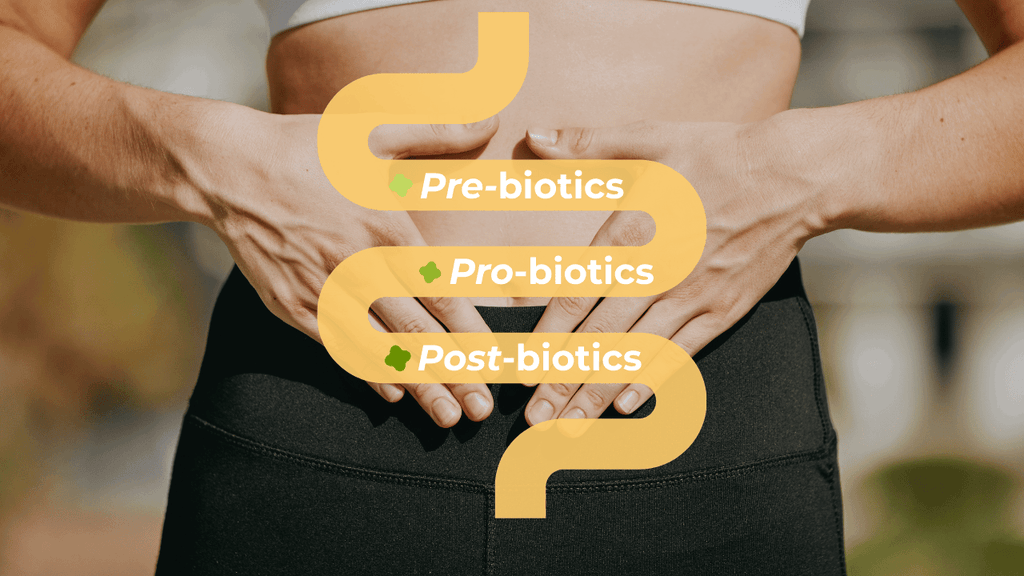
Prebiotics are substrates that host microorganisms selectively use to produce a health benefit (Gibson et al., 2017). In practice, these are mostly fermentable fibers such as inulin and galacto-oligosaccharides. They act as food for beneficial gut bacteria.
Probiotics are live microorganisms that, given in adequate amounts, confer a health benefit (Hill et al., 2014). Their effects depend on the strain, and they must stay viable through manufacturing, storage and the acidic stomach.
Postbiotics are the newest category. In 2021, the International Scientific Association for Probiotics and Prebiotics (ISAPP) defined a postbiotic as a preparation of inanimate (inactivated) microorganisms and/or their components that confers a health benefit (Salminen et al., 2021). In simple terms, they are beneficial bacteria that have been deliberately inactivated, together with the cell components and metabolites they carry.
Why postbiotics?
Postbiotics are not “better probiotics” in every respect. The evidence is still developing, and the two can work in different ways. But post-biotics offer practical and scientific advantages:
- Stability. Probiotic viability can fall with heat, moisture and time. Postbiotics are not alive, so they are not subject to this loss, which supports consistent quality and a longer shelf life.
- Consistency. With no live culture to keep alive, the composition of a postbiotic preparation is easier to define, standardize, and reproduce from batch to batch.
- Biological activity. Microbial metabolites and cell components interact directly with the gut lining and immune cells. Butyrate, for example, is the preferred energy source of colon cells and has been linked to gut barrier integrity and modulation of inflammation (Parada Venegas et al., 2019).
Why a liquid format?
Postbiotics do not challenge probiotics; they challenge the assumption that microorganisms must remain alive to be effective. This opens new possibilities for formats, sensory experiences and ingredient combinations that bring microbiome science into mainstream wellness.
Turning this potential into credible, commercially viable and enjoyable products requires expertise in stability, flavor, dosage, scalability, regulation and consumer behavior.
A manufacturer that can make this happen for your brand is TOSLA—a liquid-focused CDMO that transforms emerging science into market-ready nutraceutical products consumers can easily incorporate into daily life.
References
- Gibson GR et al. (2017). The ISAPP consensus statement on prebiotics. Nat Rev Gastroenterol Hepatol 14:491–502.
- Hill C et al. (2014). The ISAPP consensus statement on probiotics. Nat Rev Gastroenterol Hepatol 11:506–514.
- Salminen S et al. (2021). The ISAPP consensus statement on postbiotics. Nat Rev Gastroenterol Hepatol 18:649–667.
- Parada Venegas D et al. (2019). Short chain fatty acids in intestinal health and disease. Front Immunol 10:277.